page_head_bg

News

China Best Propylene Glycol Manufacturers and Suppliers

China’s Propylene Glycol industry is becoming more significant across food, pharmaceuticals, cosmetics, coatings, and industrial applications. Grand View Research estimated the global market at approximately USD 4.4 billion in 2023. Its report also projects steady growth through 2030. Fortune Business Insights reports similar expansion, supported by pharmaceutical demand and personal-care production.

China offers broad manufacturing capacity, competitive pricing, and efficient export infrastructure. Yet supplier selection requires more than comparing quotations. A reliable manufacturer should provide current certificates, batch-specific COAs, traceability records, and clear product grades. USP, EP, GB, and industrial specifications may differ. That detail matters.

“Dose makes the poison,” says clinical pharmacologist Dr. Ian Musgrave when explaining chemical exposure. The principle applies to Propylene Glycol quality control. Purity, intended use, and concentration must remain aligned. One overlooked impurity can affect a finished medicine, cream, or heat-transfer formulation.

The best Chinese manufacturers usually demonstrate stable production, documented testing, and practical export experience. Buyers should examine reactor capacity, filtration systems, storage conditions, and packaging before signing a supply agreement. A clean factory tour helps. It does not replace independent verification.

Market reports offer useful direction, but forecasts are not guarantees. Prices may shift with propylene costs, energy conditions, freight rates, and regional demand. A low offer can look attractive. It can also conceal weak documentation or inconsistent batches. Therefore, this guide evaluates China’s leading Propylene Glycol manufacturers and suppliers through quality evidence, technical capability, compliance awareness, and customer reliability. Some conclusions may remain imperfect, because supplier performance can change over time.
China Best Propylene Glycol Manufacturers and Suppliers

Propylene Glycol: Properties, Grades, and Industrial Applications

Propylene glycol is a clear, nearly odorless liquid with low volatility and strong water compatibility. It blends easily with water, alcohols, and several organic compounds. Its moderate freezing point supports reliable performance in controlled-temperature systems. However, it absorbs moisture from air. Sealed containers and dry storage are important.

Different grades serve different technical purposes. Industrial grade commonly supports heat-transfer fluids, coatings, resins, and manufacturing processes. Higher-purity grades may serve food, cosmetic, or pharmaceutical applications when they meet applicable standards. The label alone is not enough. Buyers should review the specification sheet, certificate of analysis, safety data sheet, and batch traceability. Chinese manufacturers and suppliers with disciplined quality systems can provide clearer production records and consistent testing.

Application details decide the correct choice. A cosmetic formulator may examine purity, odor, and skin-contact requirements. A process engineer may focus on viscosity, water content, thermal stability, and corrosion behavior. In my experience, treating every grade as interchangeable creates avoidable problems. A small water-content difference can affect storage stability or formulation accuracy. Some specifications also look excellent on paper but need confirmation through incoming inspection. Ask for current test data. Check the actual application conditions. This step is often overlooked.

China’s Propylene Glycol Manufacturing Industry and Supply Chain

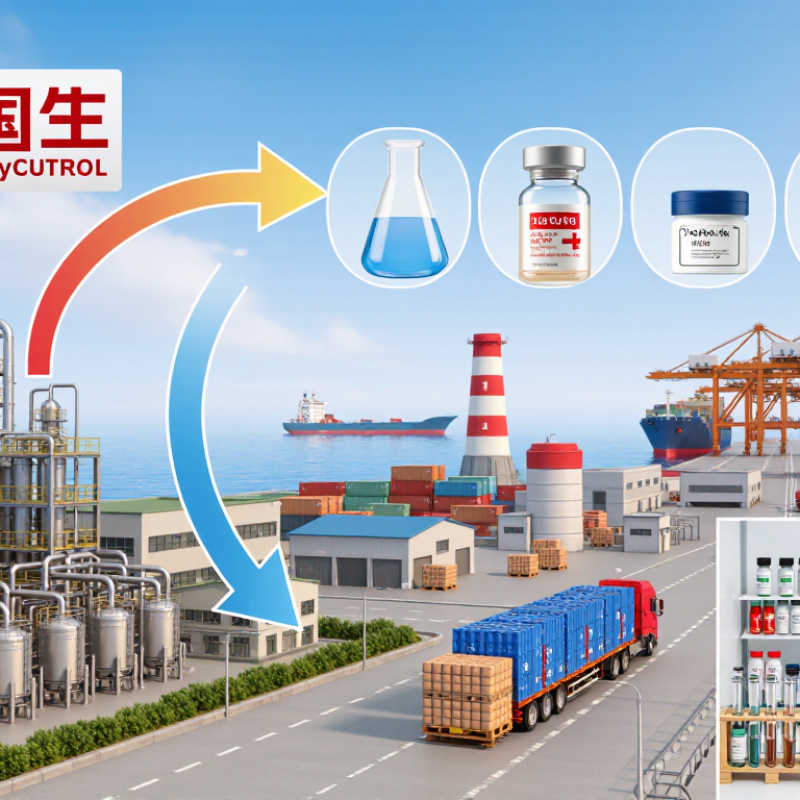
China’s propylene glycol manufacturing industry is expanding through integrated petrochemical and bio-based supply chains. China remains a major regional production base, supported by propylene oxide access, chemical parks, and coastal logistics. ICIS market assessments in 2024 described Asian supply as highly sensitive to feedstock costs, plant maintenance, and freight conditions. These factors can change monthly quotations.

Production is concentrated near eastern and northern industrial clusters. Bulk material commonly moves by tank truck, rail, and coastal vessel. Export cargo usually requires controlled storage, sealed containers, and documentation for industrial, pharmaceutical, or food-grade applications. According to Grand View Research, Asia-Pacific held the largest share of the global propylene glycol market in recent market analysis, reflecting strong demand from resins, coolants, personal care, and construction chemicals. Quality control still matters more than advertised capacity.

Small details reveal supply-chain reliability. Buyers should check water content, assay, acidity, color, packaging cleanliness, and batch traceability. Independent testing can confirm the certificate of analysis. Public capacity figures do not always match effective output. Some facilities operate below nameplate levels during maintenance or weak demand. That is easy to overlook. A practical sourcing review should compare production continuity, port distance, storage conditions, and response time, not only the lowest offer. Supplier audits and retained samples add useful protection, although they increase purchasing costs.

Key Criteria for Choosing Reliable Chinese Manufacturers

China Best Propylene Glycol Manufacturers and Suppliers

Reliable sourcing starts with evidence, not attractive quotations. Grand View Research estimated the global propylene glycol market at about USD 4.6 billion in 2023. Its forecast also indicates steady growth through 2030. This expansion increases supplier competition, but quality differences remain significant. Ask for ISO 9001 certification, current safety data sheets, and product-specific certificates of analysis. The COA should show assay, water content, acidity, color, and trace metals. Check whether these results match independent laboratory testing.

Production discipline matters. Visit the facility, or arrange a credible third-party audit. Inspect tank cleanliness, batch identification, calibration records, and warehouse conditions. A dependable Chinese manufacturer should explain raw-material sources and provide complete lot traceability. For food, cosmetic, or pharmaceutical applications, confirm the applicable grade and export documentation before signing. The 2024 report from Mordor Intelligence identifies industrial, food, and pharmaceutical uses as important demand segments. Each segment requires different controls.

Price still matters. It should not lead the decision. Request three recent batch records, not one perfect sample. Compare packaging seals, loading procedures, delivery history, and complaint response times. I have seen polished documents hide weak follow-up. That risk deserves attention. A supplier may hold ISO certification yet lack consistent process control. Ask difficult questions, record the answers, and verify them against factory evidence. Reliability is built through repeatable data, transparent communication, and shipments that arrive exactly as specified.

Leading Propylene Glycol Suppliers by Product Quality and Capacity

China’s leading propylene glycol suppliers compete through quality control and dependable capacity. Grand View Research estimates the global propylene glycol market reached about USD 4.3 billion in 2023. It also projects steady growth through 2030. That demand raises purchasing pressure on Chinese producers.

Quality begins with consistent raw materials and controlled reaction conditions. Reliable manufacturers provide batch-specific certificates of analysis, impurity profiles, and traceability records. Pharmaceutical and food applications require tighter controls than general industrial grades. Buyers should verify USP, EP, or FCC compliance through current audits, not outdated certificates. Small details matter. A clear drum label, sealed packaging, and stable color can reveal process discipline.

Capacity must mean more than a large factory sign. A practical supplier should explain annual output, operating rates, storage volume, and expansion plans. ICIS market analysis identifies construction, automotive, coatings, and personal-care demand as important consumption areas. Those sectors need different grades and delivery schedules. Strong suppliers maintain reserve inventory and offer realistic lead times, even during feedstock disruptions. This is where some evaluations remain imperfect: published capacity may describe nameplate output, not actual production. Independent testing and shipment records deserve attention. Grand View Research and ICIS data support market growth, but they cannot replace a plant audit, sample approval, and direct technical discussion.

China Best Propylene Glycol Manufacturers and Suppliers - Leading Propylene Glycol Suppliers by Product Quality and Capacity

Evaluation Dimension Industrial-Grade Propylene Glycol USP/EP-Grade Propylene Glycol Food-Grade Propylene Glycol Recommended Verification
Chemical identity Propane-1,2-diol; CAS 57-55-6 Propane-1,2-diol; CAS 57-55-6 Propane-1,2-diol; CAS 57-55-6 Check the certificate of analysis and batch identification
Molecular formula C3H8O2 C3H8O2 C3H8O2 Confirm identity by validated laboratory testing where required
Relative molecular mass 76.09 g/mol 76.09 g/mol 76.09 g/mol Use the value in the applicable pharmacopoeia or specification
Typical appearance Clear, colorless, viscous liquid Clear, colorless, viscous liquid Clear, colorless, viscous liquid Inspect a representative sample under suitable lighting
Assay target Common commercial specifications are typically around 99.5% minimum Must comply with the current USP/NF or Ph. Eur. monograph used for purchase Must comply with the applicable food additive specification and local regulations Review the latest batch COA rather than relying only on a catalog value
Density reference Approximately 1.036 g/mL at 25°C Approximately 1.036 g/mL at 25°C Approximately 1.036 g/mL at 25°C Confirm the test temperature and method before comparing suppliers
Water miscibility Miscible with water Miscible with water Miscible with water Check for haze, insoluble matter, or unexpected odor in the sample
Boiling point reference Approximately 188.2°C at atmospheric pressure Approximately 188.2°C at atmospheric pressure Approximately 188.2°C at atmospheric pressure Use the value for technical reference, not as a release specification
Low-temperature behavior Melting point approximately −59°C Melting point approximately −59°C Melting point approximately −59°C Evaluate storage and transport temperatures for the destination market
Typical applications Resins, coatings, heat-transfer fluids, solvents, and industrial formulations Pharmaceutical formulations, excipients, and regulated healthcare products Food-contact and food-processing applications where legally permitted Match the grade to the final-use regulations, not only to purity
Capacity information required from a supplier Annual nameplate capacity, current utilization, and available export volume Dedicated or qualified production capacity and validated campaign availability Food-grade production capacity, traceability, and reserved batch availability Request documentary evidence; capacity is site-specific and not defined by the chemical standard
Key purchasing documents Specification sheet, batch COA, SDS, origin statement, and packaging details Current pharmacopoeial compliance statement, batch COA, GMP-related documentation, and SDS Food-grade declaration, regulatory compliance documents, batch COA, allergen statement, and SDS Verify document dates, batch numbers, test methods, and consistency across shipments

Export Standards, Certifications, Packaging, and Logistics in China

China Best Propylene Glycol Manufacturers and Suppliers

Reliable propylene glycol exports begin with grade confirmation. Buyers should specify industrial, cosmetic, food, or pharmaceutical use before requesting quotations. Experienced Chinese suppliers normally provide a Certificate of Analysis, Safety Data Sheet, technical data sheet, batch number, and country-of-origin documents. These records should show purity, water content, acidity, color, and identifying test methods. Do not treat a certificate as complete proof. Independent inspection can confirm the shipment before loading.

Export compliance requires careful document matching. The product name, HS code, invoice, packing list, and shipping declaration must remain consistent. Depending on the destination and application, buyers may request ISO quality management records, REACH-related information, food-contact evidence, or pharmaceutical manufacturing documentation. Requirements vary by market. Current regulations should be checked with customs brokers and local authorities, because older templates can create delays.

Packaging affects product quality during transport. Common options include sealed steel drums, plastic drums, and IBC tanks, with sizes selected according to volume and handling equipment. Each container should show the batch number, net weight, production date, and storage guidance. Clean, dry containers are essential. Cargo is usually protected from contamination, excessive heat, and direct sunlight. For larger shipments, suppliers may arrange container loading with seals, photographs, and pallet records. Logistics planning should also confirm port schedules, insurance, transit conditions, and unloading space. In practice, small documentation gaps still occur, so a final pre-shipment review is worth the extra time.